A fake trading simulator
with real market charts
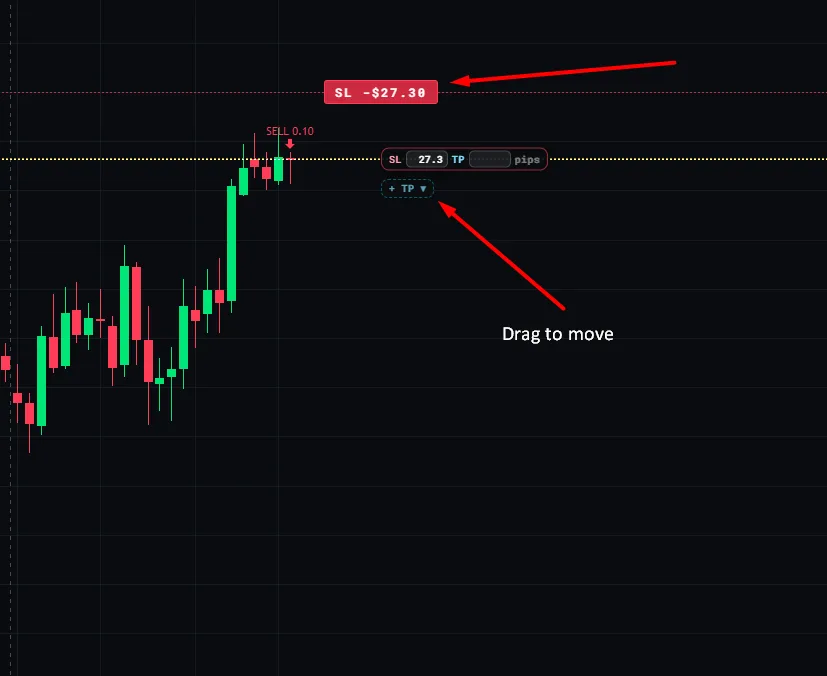
Pick a market and a date, and trade it with a practice balance. The chart loads with the future hidden and you step it forward one bar at a time, buying and selling as your setup appears. Stops and targets are dragged onto the chart, spread and commission are charged, and every session ends in a P&L report. The money is fake, the prices are not.

 Price data from Dukascopy
What a fake trading simulator should give you
The money being fake is the easy part. What makes the practice worth anything is everything else being real.
- Most fake trading appsA game with a price chartMany fake trading screens hand you a big balance, skip the spread, let you size trades by feel and show a number going up. It feels good and it teaches the habits that empty a real account, because none of the things that cost money live were ever in the way.
- This oneA real chart you cannot see ahead onHere the chart is recorded market history with every bar after the current one hidden. You make each decision on the same information a live trader had, pay the spread and commission they paid, and size from your stop. The only thing that is fake is the balance.
Want live prices instead of replayed history? A broker's demo account is the better fit for that, and we explain the difference on our demo account page. For the wider picture of practice tools, see the trading simulator page.
What you can trade with fake money
105 instruments with history reaching back to between 2009 and 2017 depending on the market, on 13 timeframes down to one-minute bars.
| Market | What is covered |
|---|---|
| Forex | Majors, minors, crosses and the main USD and EUR exotics |
| Indices | US500, US100, US30, US2000, GER40, UK100, JP225 and more |
| US stocks | 16 large caps including AAPL, NVDA, TSLA, MSFT, AMZN, META |
| Metals, energy & softs | Gold, silver, platinum, oil, natural gas, copper, coffee, cocoa |
| ETFs & bonds | Sector ETFs, TLT, Bund and US T-Bond |
| Crypto | BTC, ETH and other major pairs |
| Not covered | Futures, options, small-cap and most non-US single stocks |
Use the search box in the chart panel above to find any of the 105, pick a timeframe and open the chart. Measured daily ranges for the stock and ETF list are on the stock backtesting page.
The details that separate practice from a game
- Costs are charged.Spread and commission come off every fake trade and show as their own line in the report. Leave them out and a scalping strategy that bleeds money live looks like a winner.
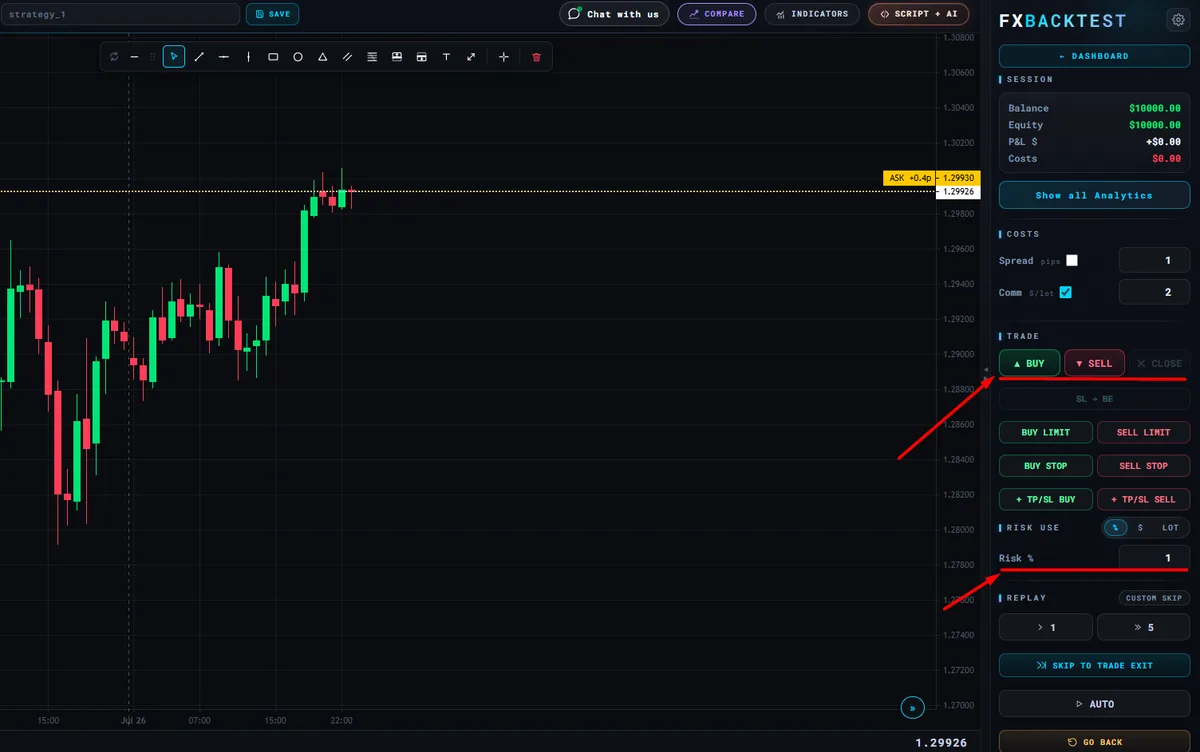
- A balance you would actually trade.Set the practice balance to what you plan to fund live. A $100,000 fake account sized by gut teaches nothing about trading $2,000 with a 1% risk rule.
- Size comes off the stop.Set risk as a percentage and the lot size is calculated from the distance to your stop, the way it should work with real money.
- No peeking.Indicators are computed only on bars that have happened and the chart cannot be scrolled past the current bar. Hindsight is what makes fake trading results look better than live ones.
- The report, not the balance.Each session ends with P&L, win rate, average R, expectancy, profit factor and maximum drawdown. Read how to read backtest analytics to see what each number tells you.
How many fake trades before the result means anything
A good week of fake trading says very little. We measured the error band on our own data: at thirty trades, a measured win rate lands more than ten percentage points from the true one 28.4% of the time. That is how a losing approach produces a month of encouraging results.
Because the chart is replayed rather than live, you are not limited to the setups the market hands you this week. Step through a year of sessions in a few evenings and you have the hundred trades that judge the edge. The full numbers are in our study on backtest sampling error.
Your first fake money session
Pick a market and a timeframe.
Search the 105 in the panel above, choose M1 to D1, and open the chart. Stick to one market for your first sample.
Set a realistic fake balance.
Use the amount you plan to trade live and a fixed risk per trade, then leave both alone for the whole session.
Step the chart and trade.
Move forward bar by bar. When your setup appears, buy or sell, drag the stop and target onto the chart, and keep going.
Tag each trade.
Mark entries A+, Mistake, FOMO or Revenge as you take them. Tagging trades is what turns a pile of fake trades into a record you can learn from.
Read the report.
Look at expectancy and drawdown, not the ending balance. That is the part that carries over to real money.
What this does not do
- No live prices. Everything is recorded history, so it is not a live paper trading feed and cannot show what the market is doing right now.
- No broker connection and no real orders. Nothing you click here ever reaches a market.
- No fake profit screens. Results are what your trades on real prices produced, losses included, and they are not meant to be shown off as real trading.
- It cannot promise a strategy works. It shows what your rules did over the history you traded, with costs applied. That beats a hunch and it is still a sample from the past.
Fake trading simulator - FAQ
What is a fake trading simulator?
It is a trading platform where the money is fake and the charts are real. You get a practice balance, open a chart, and buy or sell exactly as you would with a live account, with stops, targets and a running P&L. Here the chart is recorded market history with the future hidden, so you step it forward bar by bar and nothing you do can cost you real money.
Can I trade with fake money without a broker account?
Yes. Nothing here connects to a broker. You register, pick a market and a date, and trade the chart with a practice balance. There is no deposit, no KYC and no live order ticket, because no real order is ever sent.
Does trading with fake money actually help?
It helps if the practice is honest and it teaches bad habits if it is not. Fake money practice is useful when costs are charged, position size comes off the stop, the future is genuinely hidden and you take enough trades to judge the result. A balance that went up over twenty trades proves very little; a hundred trades with expectancy and drawdown measured tells you something.
Which markets can I trade with fake money?
105 instruments: forex majors, minors and crosses, gold, silver and energy, the main stock indices, 16 large US stocks, sector ETFs, bonds and the major crypto pairs, on 13 timeframes down to one-minute bars. There are no futures, options or small-cap stocks.
Is this a fake trading screen for showing profits?
No. Every trade here is placed against real recorded prices and the results are what your decisions produced, losses included. If you are looking for a screen that displays invented gains to show other people, this is not that tool, and the session report is built to make the honest numbers visible.
A fake trading simulator lets you buy and sell with a practice balance instead of real money. The useful question is not whether the money is fake, since it always is, but whether everything around it is real: real price history, a future you cannot see, costs that come off every trade and position sizes that follow from the stop. Get those right and fake money practice builds the same decisions you will make live. Get them wrong and it builds confidence in habits that lose.
This simulator replays recorded market history bar by bar, so you control the pace and can collect a meaningful number of trades in days rather than months. It is not a live paper trading feed and it is not a screen for displaying invented profits. If you want to compare practice tools in general, see the best forex practice tools, and for the step by step process, how to practice forex trading.